How Different is The Brave Version of Yourself from Reality?

A few days ago, an article was published in the New York Times entitled, “I Was Groped on the Subway.”  My mind immediately flashed back to this past January, to Delhi and a country where sexual harassment is so prevalent that there are ‘women only’ train cars in their railways.  My assistant, Sajji, and I accidentally boarded a train car inhabited overwhelmingly by men.  For the next 30 minutes, our time was occupied, at best, by hypervigilance, awkwardness and outrage.  So while I was reading the NYT article, it was deja vu, except that the NYT writer was telling a story that happened right here in the good ol’ U. S. of A.

I invite you to read the whole article here: http://opinionator.blogs.nytimes.com/2013/05/13/i-was-groped-on-the-subway/ but thought the writer made several great points:

Point 1.  How we think we would act can often be very different from what we do in reality.  My takeaway (and one also made in the article): Practice what you would do before it happens.  Ask your husband or boyfriend or even some girlfriends to role play a subway/train groping scenario and work through what you would actually do.  When training self defense to girls in India, this is what I do to teach them.  After you’ve taught yourself, spread the knowledge: bring this up to your daughter, your mother, your sister, your niece, and help them work through the scenario(s).

Point 2.  Every situation is different.  Consider how your personal response to harassment such as groping might substantially differ depending on the situation, and take that into account as you take control of your personal self defense.  For example, when surrounded by people you know, are you more likely to speak up and out, taking courage in the presence of supporters?  How might you respond when you find yourself in the same situation but alone or surrounded by strangers?  Your personal self defense is your responsibility – don’t wait until a situation happens before considering: a) what could happen; b) how you would respond; and, c) what you would be prepared to do.

Point 3.  Groping is predatory behavior.  Creeps who grope utilize the same techniques as creeps who prey on children: there is an element of surprise, an element of manipulating the situation so that the intended victim is rendered unable to move, and the ever popular Plausible Deniability (“I didn’t do that – you imagined it,” “it was an accident,” blah blah blah).  Lucky for the article’s writer, there were police officers witnessing the incident.  I say lucky because, as we women know, when a crime like this happens, and there is no physical evidence and it is just our word against someone else’s, guess what?  So, take a minute to really consider this.  My takeaway: Women, stand up for yourselves and be prepared to make a stink and discourage this behavior.  Men, if you see this being done, man up, step in, and let it be known you don’t like this, either.


Brothers Making a Difference for Women

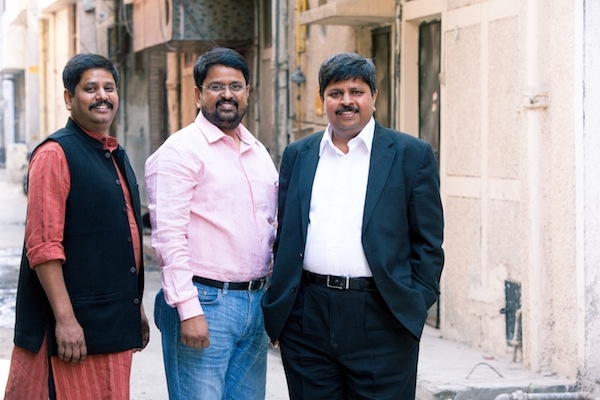
In a sea of stories showcasing the brutality of men against women and girls in India, there appears an island:  the Kant Brothers.

Wiswedel_130302_MG_7715_600x400.jpg.crop_display

Since 2001, the three brothers, Rishi, Nishi, and Ravi, have been proposing legislation, demanding that laws be enforced, improving access to services and empowering victims to take action. They have taken on violence against women, honor killings, human trafficking, child labor, slavery — a cluster of connected problems that are deeply socially-entrenched – through their organization, Shakti Vahini (http://shaktivahini.org/).

I have not worked with their organization (yet!), but I see great potential in Shakti Vahini, and in the men who run it.  The fact that their work recognizes that men’s mindsets in India have to change for substantive reductions in violence to occur sets a great example for men the world over.  From an article about their efforts:

‘ “Law-enforcement, administrative officials, the state government, the law makers, they all have the same patriarchal views,” Ravi says. “We have to fight the mindset of society.” In large part, their work means dealing with the police. “One big challenge is working with law enforcement agencies,” says Ravi. “They are the first response agency whenever there is a crime against women. They need to be sensitized day in and day out. They need to be sensitized at a mass level. The mindset has to be changed. This is a major challenge.”  The Kants have plenty of experience with what it takes to make this happen. The organization has been involved in training of more than 6,000 policemen across India, and has developed specialized training units and intervention teams to work closely with the police.’

Fabulous.  I wish them great continued success.


Men – The Other Half of the Sky

My heart never fails to break when I gaze into the eyes of a girl I’m training who has recently been rescued from unspeakable acts at the hands of men.  While Green Tara Project’s mission focuses on empowering women and girls, there is a very important point to acknowledge:  men are critical in ending violence against women.

I’m encouraged to see dialogue far and wide by men addressing their part in ending violence against women.  Over the next few weeks, I’m going to share some of the organizations or efforts that have caught my eye.

MyStrength - Their tag line is “Men Can Stop Rape.” MyStrength is a project of the California Department of Health Services and the California Coalition Against Sexual Assault (CALCASA), a statewide coalition of rape crisis centers and prevention programs founded in 1980.  Their mission is to provide leadership, vision and resources for rape crisis centers, individuals and other entities committed to ending sexual violence.  Check them out at: http://www.mystrength.org/

Lytrp


Mother’s Day is Coming! Purchase with a Purpose!

Mother’s Day is on May 12th, so if you are thinking of what to get Mom, think of empowering another mother on the other side of the planet and purchase from one (or more) online stores featuring items made by trafficking survivors.  I can tell you, having personally seen women working in such enterprises in India, that these women benefit immensely from your patronage.  From beautiful silver jewelry to gorgeous clothes, from books to bags, here are a few options to peruse and consider (in no particular order):

- Made By Survivors (http://www.madebysurvivors.com/handmade-jewelry):

MakingJewelry

Made By Survivors is an international nonprofit organization which employs and educates survivors of slavery and other human rights abuses, including many women and children living in extreme poverty.  Their programs provide training in highly respected professions and wages high enough to get people out of poverty and able to support themselves independently.  100% of profits go to support rescue and aftercare.  Don’t know what exactly to buy Mom?  No problem – they have gift certificates.

-  Women At Risk (WAR) International (http://www.warchestboutique.com/auxpage_seasonal-looks/):

0-cover

WAR’s preventive programs focus on women who are targeted by traffickers, such as widows, orphans, and girls who have been abandoned, raped, or have had a sibling sold.  They also support curative programs, involving women rescued from a trafficking situation who are now employed with dignity. For example, in Thailand, safe houses train rescued women in jewelry or card making or sewing. Their products are sold in the United States, allowing them an alternative way to earn an income.

- Nomi Network (http://www.buyherbagnotherbody.com/)

carousel-item-1

Nomi Network’s mission is to create economic opportunities for survivors and women at risk of human trafficking by equipping them with skills to produce goods for the global market place.  They sell a line of cool bags, purses, and t-shirts.

- S.E.T (stands for Support Ethical Trade) (https://www.setboutique.com/shop/): check out the necklaces made of paper beads!

BWR Collection

S.E.T. Boutique sells products made by trafficking survivors as well as a variety of other fair trade and ethical goods. The purpose of SET Boutique is to promote alternative shopping options that will end modern day slavery and exploitation.

-  The Green Woman Store (http://www.greenwomanstore.com/about.html)

VitalVoicesAlyseNelson

The Green Woman Store is an Internet Marketplace providing Fair-Trade Market Access to women artists and green entrepreneurs around the world, amplifying their voices and creating better living conditions.  Sales act like micro-credit loans that provide consistent yields, creating self-sufficiency and allowing women to invest in their lives, communities and businesses according to their priorities. GWS’ Fair-Trade Pricing covers the cost of production and facilitates social development and the protection and conservation of the environment.

Pics

Here are some pics from classes at Sarai Kale Khan:

129_1583

Girls getting ready at our first SKK class.  Note the hats and jackets.  It was about 35 F outside and no heat inside. (GTP, 2013)


129_1573

Teaching how to make a fist. (GTP, 2013)


129_1593

Always a good thing to have them hit something.  Sajji and my stomachs were sooooo bruised; but, all worth it!  These girls can hit! (GTP, 2013)


129_1577

129_1644

Sajji showing them how its done:  girls learn to make a fist; learn how to do throat strikes. (GTP 2013)


129_1645

Belle teaching throat strike. (GTP 2013)

Life at Sarai Kale Khan

GTP trained 110ish women and girls at Sarai Kale Khan.  I say ‘ish’ because after the first day of class, word got out to the community about what was being done and girls just started showing up.  So while the original schedule called for four one-hour long classes each accommodating 25 girls, 25 turned to 30 some days.  Thank god for Sajji; this training load really would not have been possible without her.  And while the 30ish maxed out time, drill capabilities and pushed the limits of the classroom-cum-training facilities, it just about killed me to turn anyone away.  Let me explain a few things more about Sarai Kale Khan.

Things happen at Sarai Kale Khan that can’t even begin to be fathomed by a mind raised in polite society.  Imagine you are a 10 year old girl living here.  Your ‘house’ is a 10 x 10 room where all the cooking, sleeping, studying, day-to-day living goes on for you, your mother, your father, and your siblings.  If you are lucky, your house has a solid wood door instead of a curtain, but even that door might not have a lock.  Each day, you must run a gauntlet to do anything.  To go to the bathroom, since there is no plumbing in your ‘house,’ you must walk down narrow corridors and risk being grabbed by drunken neighbor men or an opportunistic landlord.  If you are going to school, you will need to trust that the rickshaw driver will not drive to some remote area and attack you.  At school, beware teachers who want you to stay after class.  If you are at home, waiting for your parents to return from work, you hope your brother’s friends or a neighbor don’t barge through the unlocked door to find you alone.  And you pray that your father does not come home drunk to give you that ‘look.’   In a community where police are nonexistent and men look on females as cattle, life for a girl here is filled with depravity on a scale beyond what many of us in the West can imagine.  Self defense here is not a recreational luxury.

I can tell several women who participate in classes here have survived an attack.  They stand with their arms crossed, their gaze drifting in and out of the present, an expression of ‘oh-my-god’ flitting across their features when a drill I am asking them to do hits too close to home.  I make sure that they are not alone.  I position myself next to them, I might hold their hand, I say, “Koshish karna (try).”  They have no idea that I am talking to myself as much as I am talking to them, willing myself to stay with the task at hand, to not go running into those lanes and warrens beating up every single man I see.


Inspiration

Under the cool rays of a sun struggling to warm an unseasonably cold Delhi, a four hundred year old settlement sprawls.  Sarai Kale Khan hugs the ring road and yawns eastward in lawless warrens of three and four story tenement buildings carved with rutted roads and lanes choked with foot and motor traffic.  It is home to two million people, a far cry from its roots as a caravan stopover.   Some of its lanes, like the one we are on now, are barely wide enough for a car, let alone the truck chugging ahead of us.  Indeed, the truck stops, blocking all traffic, and Sajji and I are unceremoniously informed our ride is over, we must get out of the rickshaw.

129_1569

For a few minutes, we are stranded on the ribbon of dirty pavement lined in ubiquitous ramshackle storefronts and homes in the day’s dim light.  While we wait for our Save the Children India (SCI) contact to locate us, I am uneasy and on edge.  There are a lot of hardscrabble men occupying the street.  Several of them are generally loitering, others are going about their business.  I’ve been in similar circumstances before, back when I visited Bihar in 2010 and 2012, but this feels different.  Whereas in Bihar there was a look of curiosity and inquisitiveness in their eyes, the men’s gazes here hold something different.  Maybe an undertone of malevolence?  I can’t place it, but instead of rationalizing it away, I remain vigilant, scanning the landscape for makeshift weapons and escapes…and praying that SCI find us soon.  My prayers are answered and before long we are found by Jennifer, a cheerful SCI associate whose presence immediately dispels the ominous undertone I’ve been feeling.  Sajji and I have been just a few doors away from SCI’s center, and my relief is palpable as we enter its facilities.  We are ushered through a set of double metal doors and I find we are in a tiny courtyard hub from which hodgepodge spokes of rooms dart in all directions.  I am getting a Hansel-and-Gretel popcorn trail feeling, but realize popcorn won’t cut it as young girls, teachers, and various staff dart this way and that down the halls.  This place is alive.

We meet the director first.  Standing about six foot tall and clothed in western style office casual, Neelam Matai is a commanding figure as she rises to great us, her voice like velvet as perfect English is spoken.  Over a cup of heavenly chai (Indian tea), Neelam relates her journey to Delhi, to Sarai Kale Khan, to this place.  Her story is extraordinary.  While working with an anti-trafficking organization in Mumbai, Neelam becomes aware of a father who is abusing and trafficking his seven daughters.  This wretch of a man has even named his daughters like post dated checks.  Neelam rescues the daughters.  While waiting for a train one day, she is approached by a man and the next thing she knows, she is waking up to a crowd huddled over her.  The man punched her in the face so hard, she was knocked out cold and had to have three operations to fix her broken nose.  Unsurprisingly, the man turned out to be the abusive father.  Neelam pressed charges, and the guy’s current address is prison.

After this incident, Neelam married and moved to Delhi.  Wanting to continue her anti-trafficking work, she became aware of Sarai Kale Khan as a high risk area.  She began to make visits and inquiries, and realized no organization was serving this migrant community.  Having worked for SCI in Mumbai, Neelam hatched the idea to organize an SCI office in Delhi.  That was seven years, and several hundred women and girls helped, ago.  To speak to Neelam today, she has as much passion and resolve and energy to help as she has ever had.  Her unflagging will and desire and caring for the Sarai Kale Khan women and community is inspiring and humbling.  I want to be Neelam when I grow up.

593565312


GTP’s First Remote Trainer: Nilofar Khan

DSC06882


(Belle giving Nilofar a piggyback, 2013)

We have been blessed to have trained our very first remote trainer at Save Our Sisters, Nilofar (pronounce: nee-LO-fer) Khan.  Nilofar has worked at Save Our Sisters since 2002 and is a trained social worker.  She was in the first-ever class we did at SOS in April 2012, and she gave it her all every class.  If you were to see her on the street, Nilofar would stand out:  her short stature, perky features, sunny smile and curly hair pulled into a high ponytail make her look like a pixie – a real kick butt pixie!  This mother of grown sons packs quite a punch just with her eyes.  Forget daggers.  When she is talking about injustice and assaults against women, her whole being transforms and she shoots spears from her eyes.  She is a wonderful role model for the girls.  Even while training in self defense for herself, she was also learning beauty and hair skills to assist them in that training, as well.  So, please join me in congratulating Nilofar in her new role as Save Our Sisters Self Defense Teacher!

Last Class

We had our last classes at Save Our Sisters and at the government home on January 4th.  We started at Save Our Sisters, and took a rickshaw to the Kurla train station as we have done in the past.  Departing the rickshaw, we are thrown into chaos of human bodies, buses, motorbikes, other rickshaws.  A mass flows towards the station, and Sajji and I are carried with it.  We then climb the stairs of the the walkover bridge dodging beggars, vendors, and dogs as we scurry to the other side.  Overwhelmingly, men comprise the fluid, moving body of humanity in this area.  It is intimidating for a woman like me; it makes my head ache to think the girls I train face this gauntlet daily.  At the same time, I am even more motivated than before to reach out and train as many girls and women as I can.

The last class at Save Our Sisters begins with a technique we have not tackled yet:  piggyback rides!  Let me just say, this concept is totally foreign to the girls.  When first shown what they would be doing, panic and horror seized their faces.  Many heads started to shake ‘nayhee’ (hindi for ‘no’).  But then, all of sudden, Preety* jumps on the back of Mumtaz and off they go!  I grab another girl, and we head down the floor, squeals and peals of laughter filling the conference room.  Devashri, the SOS program manager, comes into a room of laughing, howling chaos, and soon adds her laughter, as well.  Their happiness fills me with gratitude, and I cannot think of another place I would rather be.

After the fun, we review the techniques: hammerfist, palm strike, throat strike, knee strike, various escapes.  The girls perform wonderfully.  It is bittersweet – with every strike we are coming every closer to the end, to the time when hands will be shaken, hugs will be given, final good byes said, going our separate ways into uncertain futures.  We will share, however, these wonderful memories more precious than gold.  Farewell, dear girls.  May you speed to the fulfillment of all your dreams.

* All names have been changed at the request of the organization.

Government Home Class

There have been five classes in all for the young women at the government protective home, each successively with fewer girls in attendance.  Being teenagers, they exhibit the universal traits of being a teenager anywhere.  They want to be special, to get attention, to be of individual significance, to be entertained, to show off, to be with their friends, to be rebellious.  As a class begins, several young women who are either pregnant or not feeling well* crowd the sides of the dingy room and are like mermaids to my students.  One by one, girls defect from the drill lines to sit with compatriots on the side, or have a lie down.  Sometimes, a defector or a mermaid will re/join the class randomly when there is something they find fun being done.  They disappear just as quickly back to the sidelines as soon as they feel bored or feel they are not being paid attention to.  With the language barrier, exercising order and discipline is a dance with alienation and estrangement.  It is emotionally exhausting.

That said, there is a core group of roughly 12 girls who appear to look forward to each class, and who can’t wait to do all the drills and exercises.  Since using their real names or showing their pictures is forbidden, I will call them The Dirty Dozen, or the DD for short.  Every time Sajji and I come to class, the DD inspires me.  They are gifted with natural athletic abilities, quick minds, and a large capacity for work.  It is my great fortune that I have made their acquaintance, that I learn from them possibly as much as they learn from me.

* ‘Not feeling well’ is a term often used for a girl who is having her period.  In this part of the world, a girl who is going through her period is not expected to participate in physical exercise, or even go to school.  And not having access to pain relief (due to protocols or expense), I’m not sure I can blame the girls from not wanting to be active or at school.  But this practice has obvious consequences, as pointed out by Nicholas Kristof and Sheryl Wudunn in their book ‘Half the Sky.’  Consider a girl who is excused one week of class per month per year.  In 46 weeks of school, the girl misses an additional 11 weeks of academic learning.  This is often enough to cause them to eventually drop out.  And this is routine and accepted in many developing countries.  Oh, my kingdom for an ibuprofen…

Off to class.

129_1552

« Previous entries Next Page » Next Page »